.png)

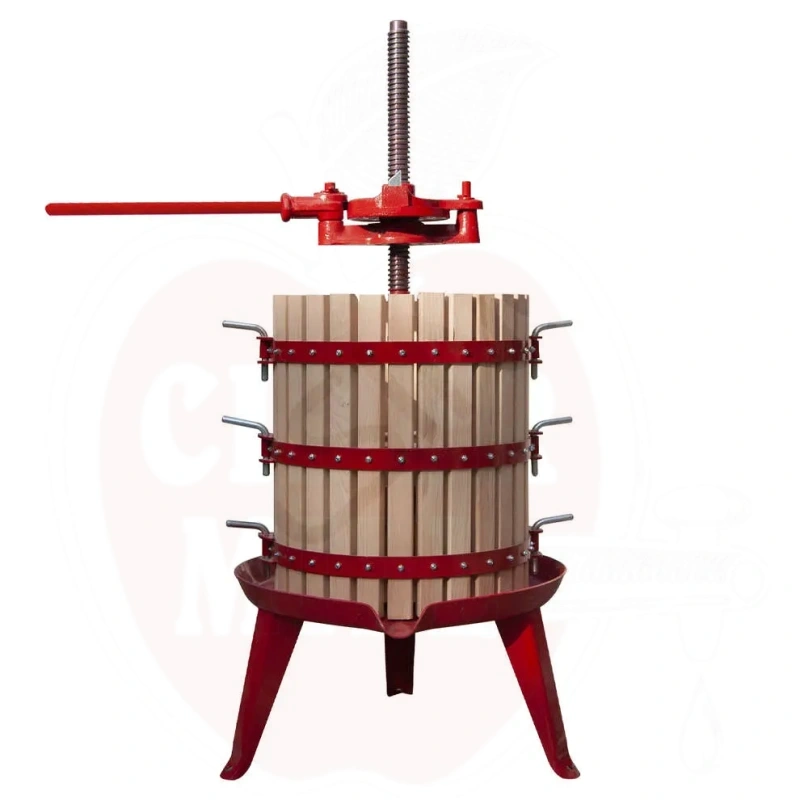

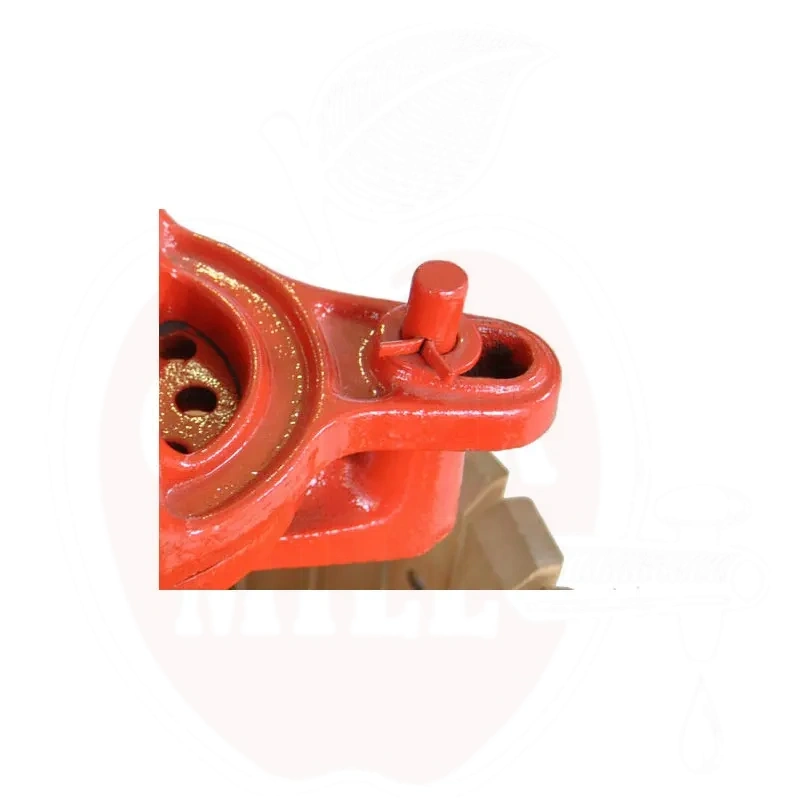
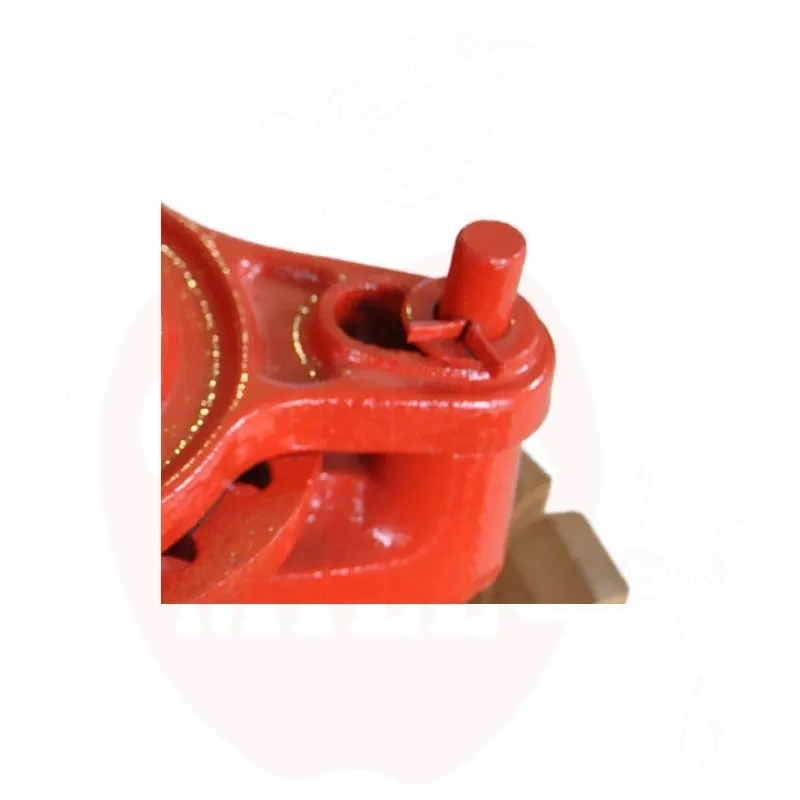
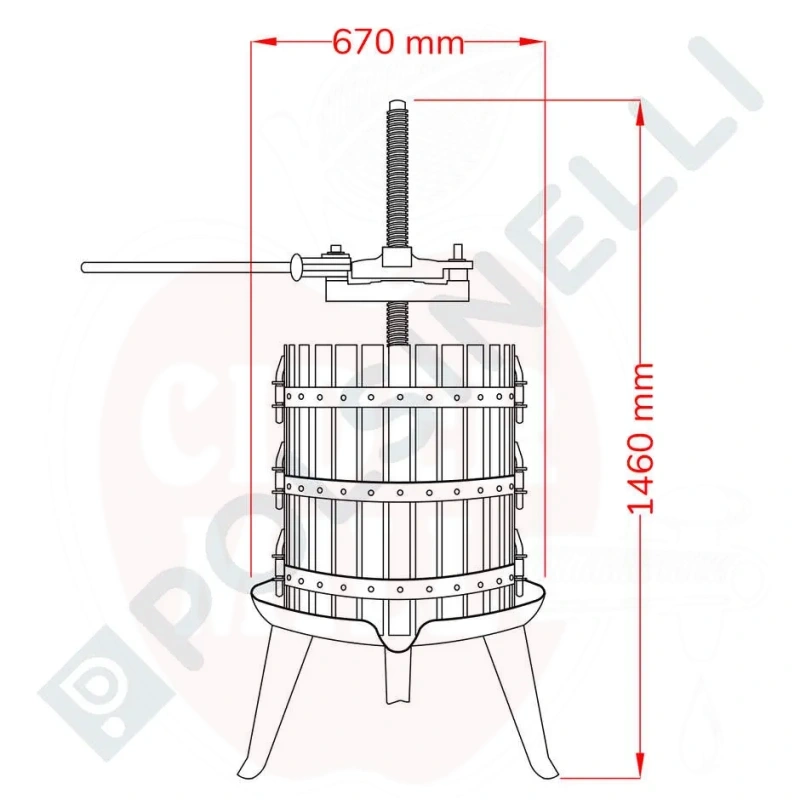
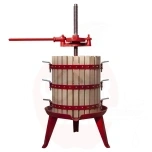
Press 69L ⌀40 ratchet wine
.png) Professionals recommend - producers prefer!
Professionals recommend - producers prefer!
Brand: Polsinelli
Unit: pc
Stock qty: Pre-order
Delivery time (day): 7-45

 Delivery time within Estonia for stock items approx. 3-5 working days. NOTE! Due to the rapid price increase, prices for non-stock items may change without prior notice! Standard prices with 24% VAT.

6,65 €/Kg
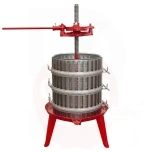
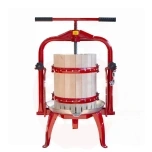
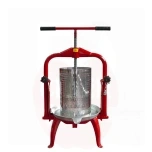
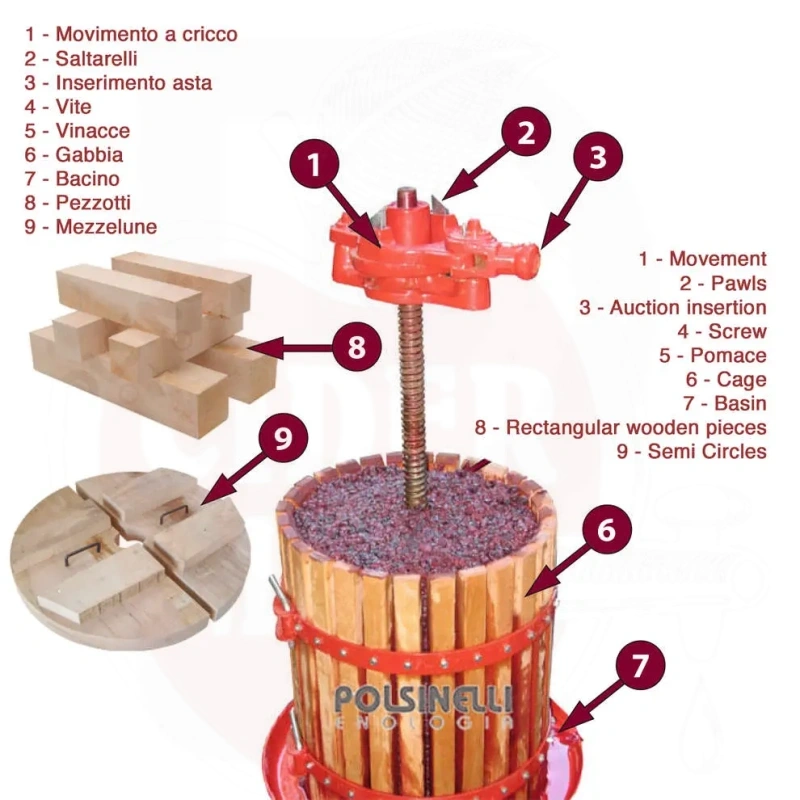
The 40 cm lever press is a tool of exceptional quality, fundamental in wine production, capable of efficiently extracting must from marc thanks to a powerful lever. Made entirely in Italy to provide small producers and farms with a product of the highest standard. It consists of a cage with wooden staves with a diameter of 40 cm and a capacity of no less than 250 kg of grapes. The cage is supported by a strong metal skeleton, adequate to withstand even high pressures. The central screw is made of drawn steel to ensure its longevity. The ratchet can advance at two different speeds in order to precisely control the applied pressure. Complete with crescents and pieces, which are essential tools for evenly distributing the ratchet action over the entire surface.
Features: Manual two-speed ratchet movement operated by lever, cast iron ratchet, cage made of evaporated beech wood slats and removable pins, drawn steel screw, reinforced steel must gathering basin with brackets, steel support tripod.
Technical data: Internal diameter of cage: 400 mm. Cage height: 550 mm. Weight: 75 kg. Load capacity: 250 Kg of grapes. Complete with chunks and crescents.
How it works
Getting started: Before using the press it is necessary to remove with a brush and/or air blast any dust particles which are present in the inner parts, furthermore use a damp cloth to clean: the cage, the semi-circular wooden press plates and the pawls.
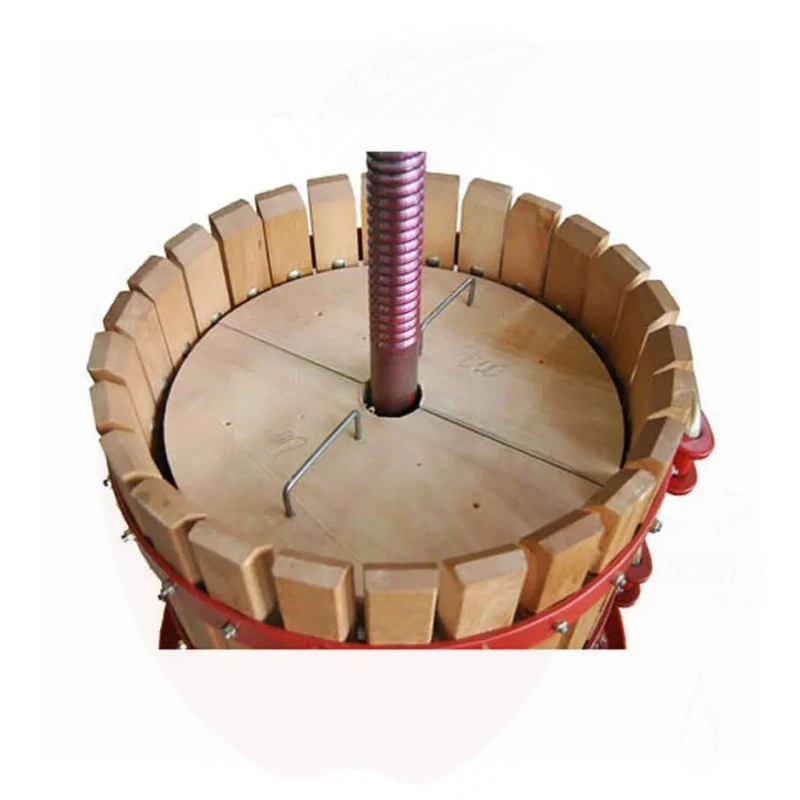
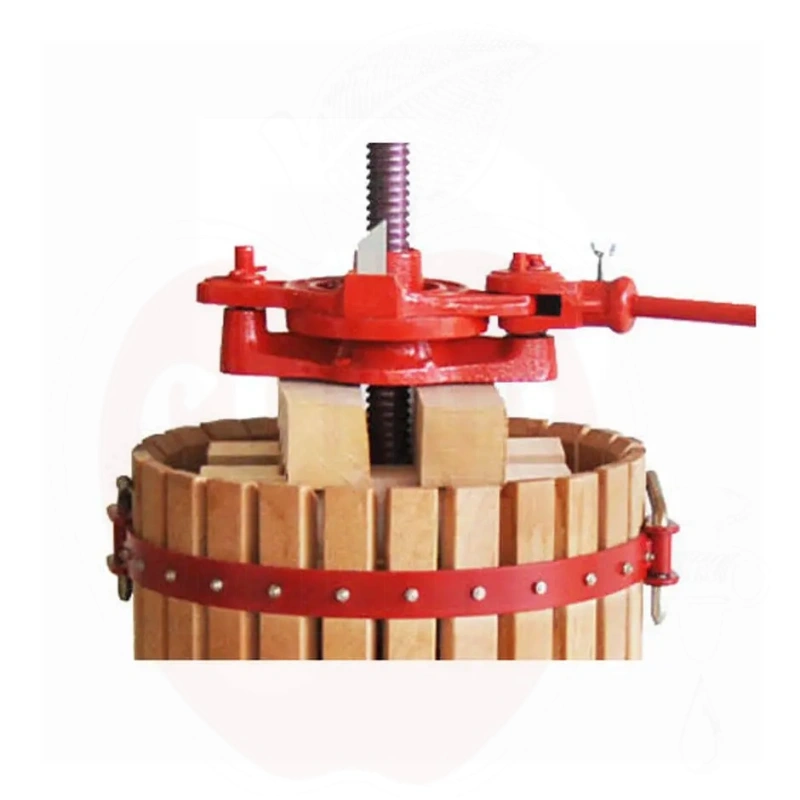
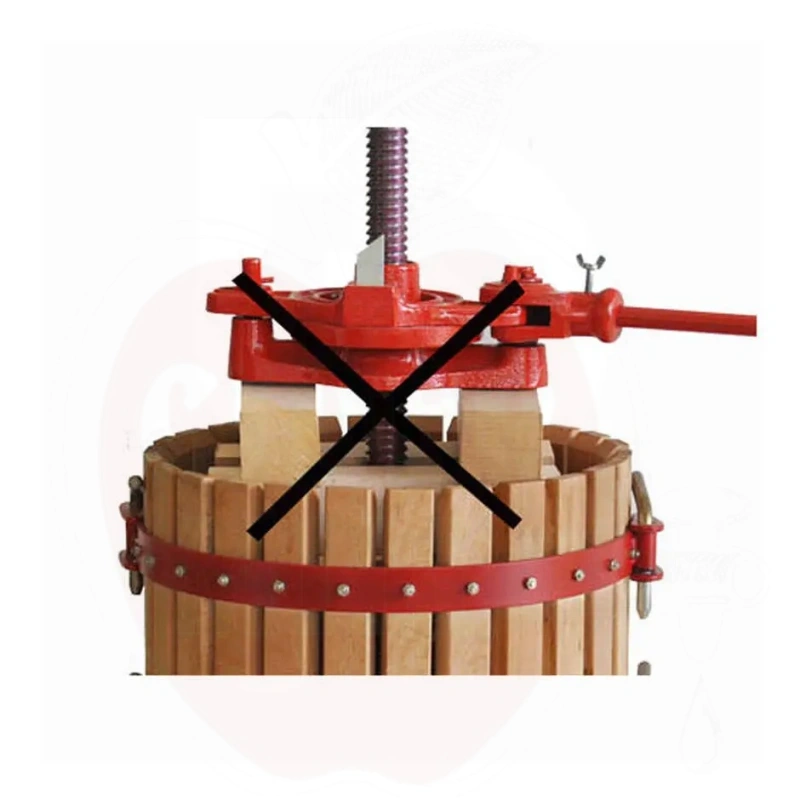
Filling the press: Remove all interior wood pieces and make sure using the plugs supplied closes the cage. Lift the jack upwards along the threaded screw (turning it counterclockwise), fill in the cage with the grape pulp and insert the two semi-circular wooden press plates once joined they will coincide with the diameter of the cage and there will be a gap in the center for the main screw. Place the wooden blocks on top of the half-moons, they should rest perpendicular to the direction in which the half-moons have been set.
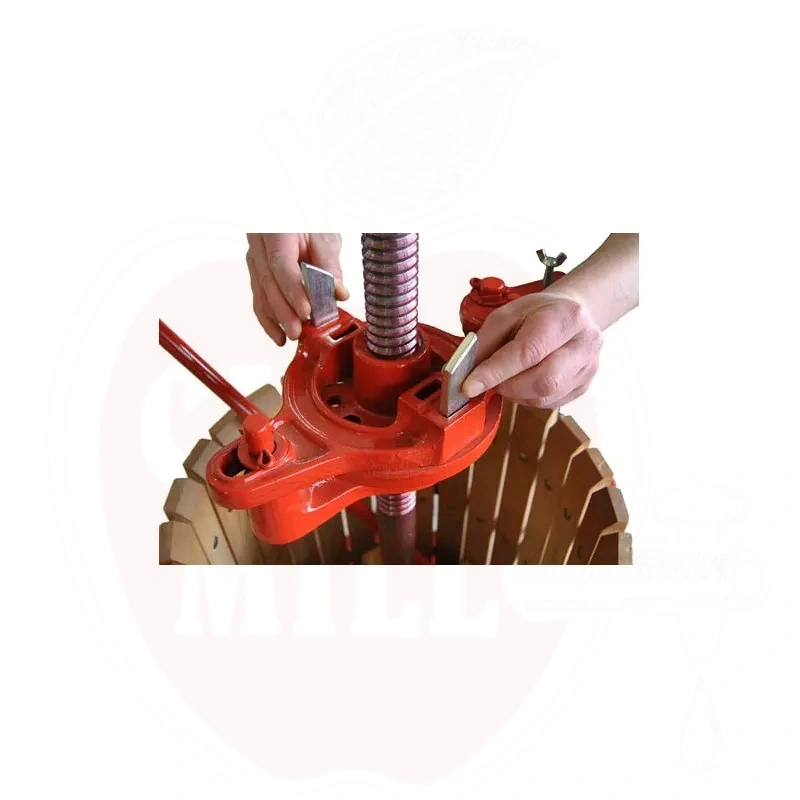
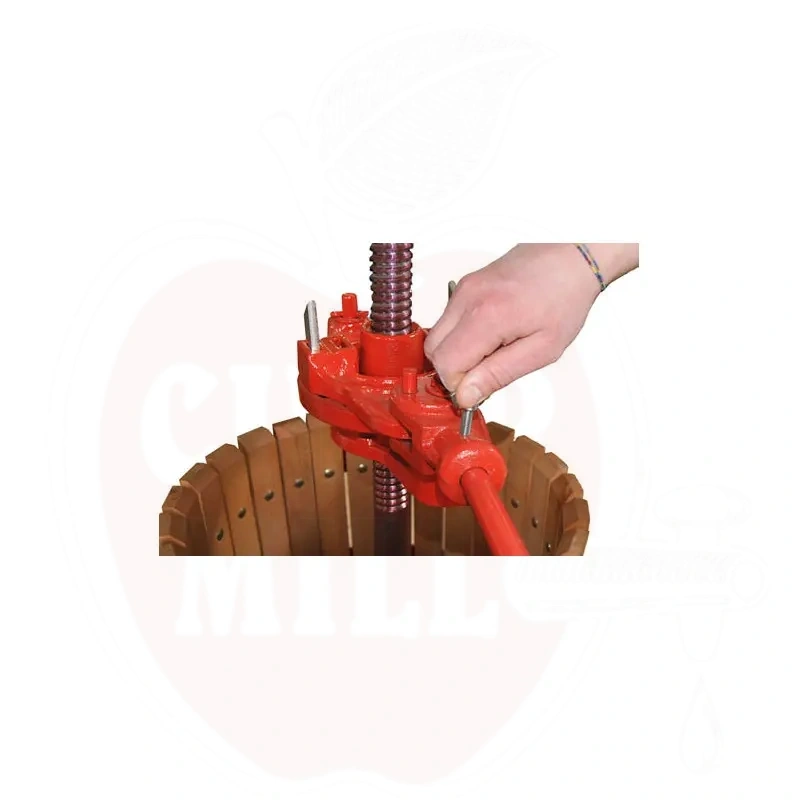
Preparing the pressing: Lower the jack, turning it clockwise until it rests on the wooden blocks. Insert the metal pawls, making sure that the tips fit into the round holes of the crown. Insert the handle into the hole on the ratchet and secure it with the throttle screw.
The pressing: Stand in front of the ratchet and grab it with both hands, set it in action by moving it forward and backward. This movement will cause the shifting in both sides of the upper part of the ratchet. The action exerted on the ratchet allows the metal pawls to advance from the holes in which they have been inserted to the ones immediately following. This determines the downward movement of the rotation of the jack, thus pressing on the wood blocks, which lie on the grape pulp. When the jack is lowered to the top of the edges of the cage, it is necessary to stop the action, in order to refill the cage with grapes. Once you have finished the last pressing, bring the ratchet up (turning it counterclockwise), remove all wood blocks, remove the cage, pull out the pomace and clean thoroughly.
| application_area | small production |
| material | Evaporated beech wood (cage), drawn steel (screw), cast iron (ratchet), steel (tripod, must basin) |
| pressing_method | mechanical |
| Weight (kg) | 75.000000 |
| High (m) | 0 |
| Width (m) | 0 |
| Length (m) | 0 |