.png)

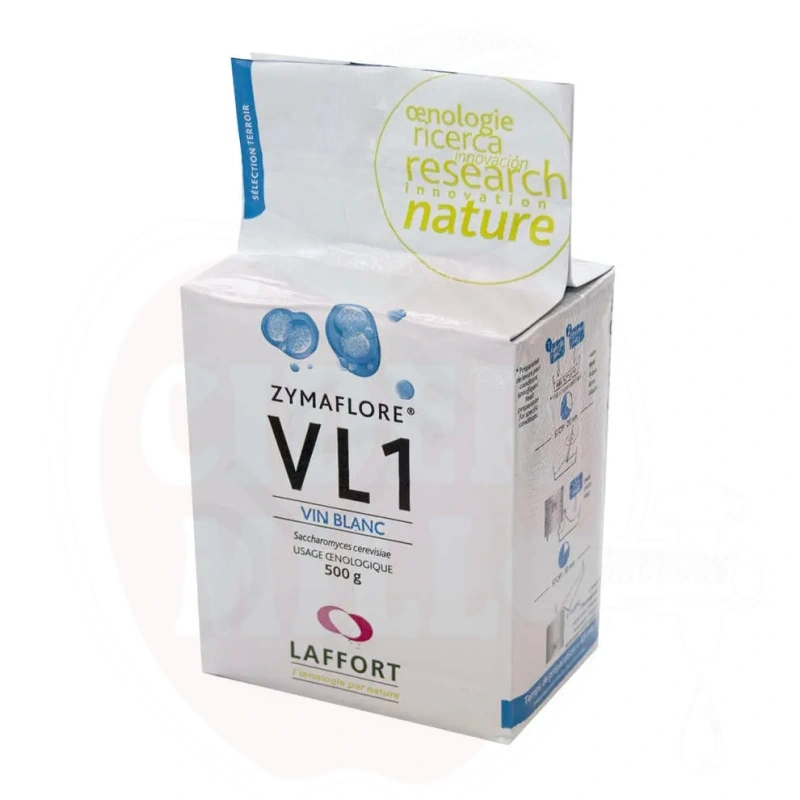

Yeast (500g) for white and rosé wines Zymaflore VL1
Brand: Laffort
Unit: pc
Stock qty: Pre-order
Delivery time (day): 14-30

 Delivery time within Estonia for stock items approx. 3-5 working days. NOTE! Due to the rapid price increase, prices for non-stock items may change without prior notice! Standard prices with 24% VAT.

85,27 €/Kg
Yeast (500g) for white and rosé wines Zymaflore VL1
Yeast for white wines with high aromatic finesse (prof-strain). Specifically for great Chardonnays. Detector of terpene-type varietal aromas.
Product objective:
Great fineness and cleanliness of aromas,
Revelation of terpene notes. Suitable for vinification in barrels.
Recommended for grape varieties:
Chardonnay, Riesling, Gewürztraminer, Pinot Grigio
Fermentation characteristics:
- Alcohol tolerance: up to 14.5% vol.
- Tolerated temperature range in AF: 16 - 20°C.
- Nitrogen requirement: high.
- Reduced production of acetaldehyde, volatile acidity and H₂S.
- Reduced foam production.
Aromatic and organoleptic characteristics:
- Strain pof(-): does not have cinnamate decarboxylase, the enzymatic equipment responsible for the formation of vinyl phenols which mask the aroma and are responsible for heavy "pharmaceutical, varnish" notes (particularly insidious in the case of grapes that are not perfectly healthy).
- Excellent ability to express terpene-type varietal aromas (ß-glucosidasic activity).
- High aptitude of the lees produced for use in refinement.
Average dose of use:
20-30 g/hL
Packaging:
500g bag.
Store in a dry place, at a moderate temperature (4 to 8°C) and in the original packaging. The best use-by date is 18 months.
Dry wine-making yeast, suitable for use in foodstuffs.
Complies with the International Oenological Codex. Does not contain GMOs
Preparation:
Rehydrate according to the protocol indicated on the packaging.
- Use a clean container of inert material.
- Do not mix with other products (except Superstart)
- Use the product immediately after preparation
- Do not use if the package is not intact
Analysis Type:
- Moisture (%): < 8
- Live cells LSAS (CFU/g): ≥ 2×10¹⁰
- Lactic bacteria (CFU/g): < 10⁵
- Acetic bacteria (CFU/g): < 10⁴
- Yeasts of genus other than Saccharomyces (CFU/g): < 10⁵
- Yeasts of different species or strain (%): < 5
- Coliforms (CFU/g): < 10²
- Moulds (CFU/g): < 10³
- E. Coli (/g): abs.
- Salmonella (/25 g): abs.
- Staphylococcus (/g): abs.
- Lead (ppm): < 2
- Arsenic (ppm): < 3
- Mercury (ppm): < 1
- Cadmium (ppm): < 1
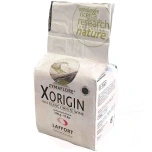
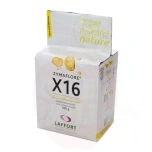
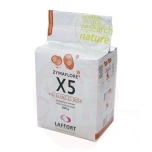
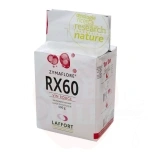
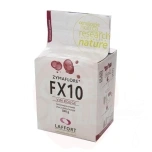
The ZYMAFLORE F15®, VL3®, and more recently X5®, X16®, FX10® and RX60® yeasts are worldwide references.
Nowadays, winemakers expect much more from yeast than the simple and complete transformation of sugars; our team of researchers responsible for isolating and selecting new yeast strains is very clear about this. It is thanks to this investment in research and development that LAFFORT is able to offer, through its ZYMAFLORE® range, oenological yeasts adapted to revealing the intrinsic potential of the grape while offering excellent fermentation performance.
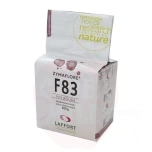
- The first strategy consists in isolating the yeasts in nature (Ecoselection): in the vineyard, in the cellar, in spontaneous fermentations, etc. These so-called "terroir" yeasts have proved to be particularly suited to revealing the potential of a particular type of wine or vine. This is the case, for example, with F15®, F83®, VL1® or VL3®.
- Another selection strategy is based on breeding. This technique, which exploits a naturally occurring phenomenon, provides the possibility of combining the characteristics of different yeasts in a single strain without resorting to genetic manipulation techniques. It is possible to cross two individuals (yeasts) with different genetic heritage and isolate in the progeny the individuals with the desired characteristics. For example, by crossing a yeast with very high fermentation performance with another yeast with very interesting detection or aromatic expression capacities, X5®, X16® and RX60® strains were obtained. With the same technique, applying the strategy of backcrossing, it was possible to improve the historic and glorious F10® strain, obtaining FX10®, which maintains 94% of the genetic heritage of F10® and retains its highly appreciated oenological potential for the production of great wines, while combining it with great fermentation vigour. This technique offers very interesting prospects for responding promptly to the evolution of market demands.
FAQ about Zymaflore VL1 Yeast for White and Rosé Wines (500g)
What makes VL1 special for white wines?
Zymaflore VL1 is specifically selected for white wines with high aromatic finesse, particularly Chardonnay. It is a detector of terpene-type varietal aromas, bringing out the natural aromatic complexity of grape varieties.
What is the alcohol tolerance of VL1?
VL1 has an alcohol tolerance of up to 14.5% vol., which is well-suited for white and rosé wine production. This level is sufficient for most white grape varieties while preserving delicate aromatic profiles.
Can VL1 be used for rosé wines?
Yes, VL1 is suitable for both white and rosé wines. Its ability to enhance aromatic finesse makes it particularly effective for rosé production where preserving fresh fruit aromas and delicate colour is important.
What is the recommended fermentation temperature?
For optimal aromatic development, ferment at 14-18°C for white wines and 16-20°C for rosé wines. Lower temperatures help preserve volatile aromatics but may slow fermentation, so adequate nutrient addition is recommended.
| application_area | small production, industrial |
| certifications | Complies with International Oenological Codex; does not contain GMOs |
| lumav_meta_description_de | Zymaflore VL1 offenbart die Terpenaromen großer Chardonnays bei einer Alkoholtoleranz von bis zu 14,5% vol. |
| lumav_meta_description_en | Zymaflore VL1 yeast reveals terpene aromas in great Chardonnays, with alcohol tolerance up to 14.5% vol. |
| lumav_meta_description_et | Zymaflore VL1 pärm toob esile suurepäraste Chardonnay veinide terpeeniaroomid, taludes alkoholi kuni 14,5% vol. |
| lumav_meta_description_fi | Zymaflore VL1 -hiiva tuo esiin suurten Chardonnay-viinien terpeeniaromit, sietäen alkoholia jopa 14,5 til-%. |
| lumav_meta_description_lt | Zymaflore VL1 mielės atskleidžia puikaus Chardonnay vyno terpeninius aromatus, toleruoja iki 14,5 % alkoholio. |
| lumav_meta_description_lv | Zymaflore VL1 raugs atklāj lielisko Chardonnay vīnu terpēna aromātus, alkohola tolerance līdz 14,5% tilp. |
| lumav_meta_description_sv | Zymaflore VL1 avslöjar terpenaromerna i stora Chardonnay-viner, med en alkoholtolerans på upp till 14,5 volymprocent. |
| lumav_meta_keywords_de | Zymaflore VL1, Weinhefe, Weißwein, Chardonnay, Terpen, önologische Hefe |
| lumav_meta_keywords_en | Zymaflore VL1, wine yeast, white wine, Chardonnay, terpene, oenological yeast |
| lumav_meta_keywords_et | Zymaflore VL1, veinipärm, valgevein, Chardonnay, terpeen, önoloogiline pärm |
| lumav_meta_keywords_fi | Zymaflore VL1, viinihiiva, valkoviini, Chardonnay, terpeeni, enologinen hiiva |
| lumav_meta_keywords_lt | Zymaflore VL1, vyno mielės, baltasis vynas, Chardonnay, terpenas, enologinės mielės |
| lumav_meta_keywords_lv | Zymaflore VL1, vīna raugs, baltais vīns, Chardonnay, terpēns, enoloģisks raugs |
| lumav_meta_keywords_sv | Zymaflore VL1, vinjäst, vitt vin, Chardonnay, terpen, önologisk jäst |
| lumav_meta_title_de | Zymaflore VL1 Hefe 500g · FERMETECH |
| lumav_meta_title_en | Zymaflore VL1 Yeast 500g · FERMETECH |
| lumav_meta_title_et | Zymaflore VL1 pärm 500g · FERMETECH |
| lumav_meta_title_fi | Zymaflore VL1 hiiva 500g · FERMETECH |
| lumav_meta_title_lt | Zymaflore VL1 mielės 500g · FERMETECH |
| lumav_meta_title_lv | Zymaflore VL1 raugs 500g · FERMETECH |
| lumav_meta_title_sv | Zymaflore VL1 jäst 500g · FERMETECH |
| manufacturer_phone | +33 5 56 86 53 04 |
| product_compatibility | Chardonnay, Riesling, Gewürztraminer, Pinot Grigio, white and rosé wines |
| temperature_range | 16-20 |
| Weight (kg) | 0.550000 |
| High (m) | 0.04 |
| Width (m) | 0.13 |
| Length (m) | 0.2 |

7,90 €